Bird guides · Winter visitors
Where Do Robins Go in Winter?
The short answer: many robins don't go anywhere. Some fly as far as Florida and southern Texas, but robins have been seen in January in every U.S. state except Hawaii, and plenty spend the winter in the Northeast. They simply stop acting like the robins we know: they leave the lawn for the woods, travel in quiet flocks, and live almost entirely on berries.
That's why your "first robin of spring" may not be a newcomer at all. As Audubon's field guide puts it, that bird "may be a bird that has wintered only a few miles away." Here's what robins really do in winter, where to look for them, and how to make your yard part of their route.
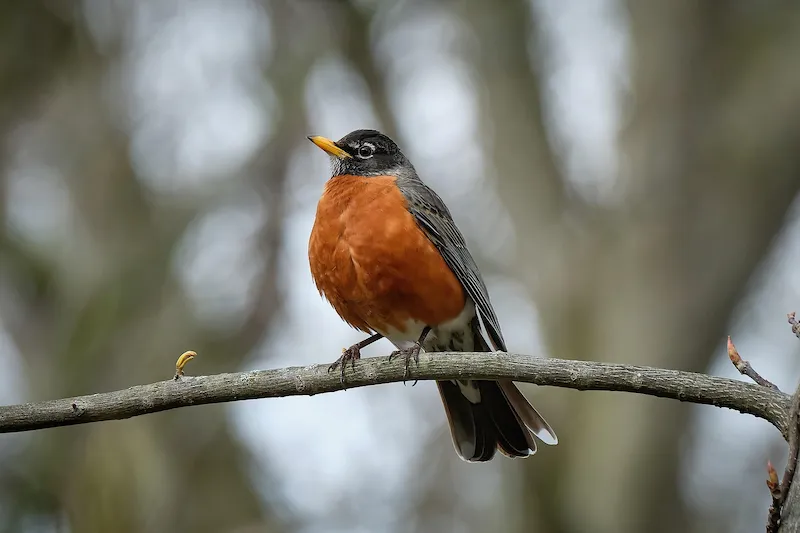
By the My Window Birds editors · Updated November 27, 2026 · Sources
Do robins migrate? Yes — and no
Robins are only partly migratory. Their winter range is enormous, stretching from southern Canada to Guatemala. In the words of Journey North's robin FAQ, some "retreat all the way to southern Texas and Florida, but others winter as far north as they can find berries."
A few details surprise most people:
- Your winter robins may be different birds. Mass Audubon notes that the robins wintering in Massachusetts most likely come down from northern New England or Canada. The pair that nested in your yard in June may be spending January somewhere south of you.
- Males are more likely to stay north. Journey North says males are "far more likely to remain in the north than females." Staying close to the breeding grounds lets them claim a territory early in spring.
- Winter robins are becoming more common. Mass Audubon's Breeding Bird Atlas reports that winter counts of robins "have climbed consistently in recent years, possibly due in part to warmer winters." Northern Woodlands, citing Project FeederWatch data, reported in 2023 that thirty years earlier robins were completely absent from January feeder counts in Vermont and New Hampshire. In the winter before that article, one feeder in ten had a robin visitor.
A winter robin is a different bird
The robin you picture — alone on the lawn, head cocked, tugging up a worm — is a spring-and-summer robin. In winter almost everything about its life changes.
| Spring and summer | Fall and winter | |
|---|---|---|
| Food | Earthworms and insects | Wild fruit, often more than 90% of the diet |
| Where | Lawns, gardens, open ground | Woods and fruiting trees and shrubs |
| Company | Territorial pairs | Flocks, sometimes hundreds or thousands; shared night roosts |
| Voice | Singing at dawn | Mostly quiet, apart from short calls |
The diet figure comes from Kenn Kaufman, writing for Audubon: "during fall and winter, fruits can make up more than 90 percent of the diet." The flock sizes come from American Bird Conservancy, which also notes that robins "make little noise during winter months." Mass Audubon adds that winter robins roost together at night to fend off predators.
Why winter robins seem to disappear
If robins are still around, why does the yard feel empty of them by December? Three reasons:
- They've left the lawn. Once the ground freezes, earthworms are out of reach. Winter flocks "spend their time in wooded areas rather than lawns," as the National Wildlife Federation puts it, so most people never notice them.
- They've gone quiet. No dawn song means no reminder that they're there.
- They keep moving. Mass Audubon notes that as flocks use up the fruit in one place, they move on to the next. That's why a crabapple can sit untouched for weeks, then suddenly fill with robins until the fruit is gone.
Food, not cold, decides where they go
Robins handle cold remarkably well. When temperatures drop, The Nature Conservancy explains, they puff up the fine, downy feathers closest to the body to keep heat in. Journey North explains that robins "make their body heat by shivering" and can survive extreme cold as long as they have enough food for energy.
What moves them is food. American Bird Conservancy is blunt about it: migrating robins are not chasing warmer weather — "the real motivation is food." When the fruit runs out, they move. ABC adds that "a heavy snowfall that persists for more than a few days may send them on their way."
In spring, Journey North notes that robins moving north "tend to follow the 37-degree average daily isotherm" — the line where the average daily temperature reaches about 37°F. It's a handy rule of thumb for when the first singing males will show up near you.
Where to see robins in winter
- Check the fruiting trees. Robins gather wherever fruit lasts into winter: crabapples, hollies, eastern red cedar and other junipers, hawthorns, and sumac. Mass Audubon's list for Massachusetts is red cedar, American holly, hawthorn, and some dogwoods and crabapples.
- Listen for calls, not song. The National Wildlife Federation describes the robin's common calls as "a low tup or a higher, emphatic teep."
- Watch open water. In a freeze, a reliable source of water draws robins in. Audubon notes they "seem to appreciate a heated birdbath as other water sources may be frozen."
- Look after a heavy snow. Lasting snow sends flocks wandering in search of food, and they may turn up in yard trees that still hold berries.
How to help robins in winter
Start with an honest expectation: robins won't come to a seed feeder. Journey North says it plainly — "Robins will NOT take birdseed" — and the National Wildlife Federation agrees. In winter they live on fruit, not seeds.
Here's what does work:
- Mealworms. Journey North calls mealworms "one of the best kinds of food for wintering robins." Live or dried, a small handful in a dish or on a low platform is enough. They suggest starting with about a dozen on a sunny, above-freezing day.
- Fruit on a tray. Blueberries, raisins, or chopped apples on a platform feeder (NWF). Project FeederWatch adds that grapes and raisins should be free of preservatives. Be patient: Journey North warns that it can take robins a while to learn that fruit in a feeder is food.
- Open water. A heated birdbath may do more for robins than any food you can offer. See our guide to keeping a bird bath from freezing.
Feeding robins is a pleasure, not a rescue. Robins only winter where there's wild food, so, as Journey North notes, "feeding them isn't necessary." The most lasting help you can give is to plant the right shrubs.
Plant for winter robins
The best winter robin food grows on branches. These native trees and shrubs hold fruit into the cold months across much of the Northeast:
- Winterberry (Ilex verticillata)
- Eastern red cedar (Juniperus virginiana)
- Staghorn sumac (Rhus typhina)
- Red chokeberry (Aronia arbutifolia)
- American holly (Ilex opaca)
- Native hawthorns, dogwoods, and crabapples
The first four appear on Northern Woodlands' list of the best native winter foods for robins in New England. Mass Audubon names red cedar, American holly, hawthorn, and certain dogwoods and crabapples as trees and shrubs that hold their fruit through the winter.
What not to plant
Robins happily eat the fruit of several invasive plants and spread the seeds into woods and fields. In a University of Connecticut study, captive robins "significantly preferred invasive fruits to similar native fruits" in two of three choice tests.
Connecticut already prohibits the sale of several invasive fruiting plants, including:
- Asiatic (Oriental) bittersweet
- Common buckthorn
- Multiflora rose
- Bush honeysuckles (Amur, Morrow's, and Tatarian)
- Autumn olive
Callery ("Bradford") pear joins that list in October 2027. If any of these already grow in your yard, replacing them with winterberry or red cedar is one of the best things you can do for winter birds.
The bottom line
Robins don't so much leave in winter as change jobs. Many stay in the Northeast, especially males and birds from farther north, and they live on berries in quiet, roaming flocks. Look for them in fruiting trees and around open water. To help, offer mealworms, fruit, and a heated birdbath, or better yet, plant winterberry, red cedar, or sumac. Then the next robin you see in January won't come as a surprise.
Get the free guide: Backyard Birds of the Northeast
The American Robin is one of 15 birds in our free printable guide. Get a card for each one — how to recognize it and exactly what to feed it.
Download the Free GuideCommon questions
Do robins stay in the Northeast all winter?
Many do. Robins have been recorded in January in every U.S. state except Hawaii. In the Northeast, winter robins gather in flocks in wooded areas and around fruiting trees, so they're easy to miss. Mass Audubon notes that winter counts have been rising in recent years.
What do robins eat in winter?
Mostly fruit. In fall and winter, wild fruit can make up more than 90% of a robin's diet. Favorites include crabapples, holly berries, eastern red cedar, hawthorn, sumac, and winterberry. Earthworms return to the menu once the ground thaws.
Is the first robin a sign of spring?
Not always. The robin you see in March may have wintered only a few miles away. A surer sign of spring is robins singing at dawn and pairing off on lawns again.
Should I feed robins in winter, and what should I put out?
You don't have to, since robins only winter where wild food exists, but you can help. Skip birdseed, which robins won't eat. Offer mealworms, fruit such as blueberries, raisins, or chopped apples on a tray, and open water from a heated birdbath.
Why is my yard suddenly full of robins in winter?
A roaming flock has probably found fruit. Winter robins travel in flocks that can number in the hundreds, and they move on once they've used up the fruit in an area. A lasting snowfall can also push flocks to wander in search of food.
Where do robins roost in winter?
Together, in trees. BirdNote says a typical winter roost holds a few dozen to a few hundred robins, in trees, an old barn, or under a bridge, and the largest hold thousands; one roost near St. Petersburg, Florida, was estimated at 720,000 birds in 2007. Mass Audubon says roosting together helps robins fend off predators, and sharing a tree roost also saves body heat. In Massachusetts, look for winter robins in swampy woodlands as well as on lawns and in fields.
Sources
- Mass Audubon — American Robins
- Mass Audubon — Not-So-Common Winter Birds
- BirdNote — 61 Tons of Robins! (2021)
- Mass Audubon — Breeding Bird Atlas: American Robin
- American Bird Conservancy — Do American Robins Migrate?
- National Audubon Society — Are American Robins Really a Sign of Spring? (Kenn Kaufman)
- National Audubon Society — Guide to North American Birds: American Robin
- Journey North — Robin Migration FAQ (archive)
- Journey North — Robins in Winter FAQ (archive)
- Northern Woodlands — A Robin's Winter Habits (2023)
- National Wildlife Federation — Bird Watching: The American Robin
- National Wildlife Federation — Bird of the Week: American Robin
- The Nature Conservancy — Why Are You Seeing Robins in Winter?
- Connecticut Invasive Plant Working Group — Connecticut Invasive Plant List
- LaFleur (2006), invasive and native fruit preferences of birds, University of Connecticut dissertation
Keep reading: meet the 15 birds of the Northeast, see who else is around in winter birds of the Northeast, see what to feed birds in winter, learn how to keep a bird bath from freezing, or welcome the other winter regulars, the Dark-eyed Juncos.