Bird guides · Blue Jays
How to Attract Blue Jays
The short answer: peanuts. Audubon calls peanuts the Blue Jay's favorite feeder food. Offer them in the shell or shelled, on a platform feeder or a large hopper, and add black-oil sunflower and suet. If you can, plant an oak. To keep squirrels from eating most of it, put the feeder on a pole with a baffle, set 8 to 10 feet away from anything a squirrel could jump from.
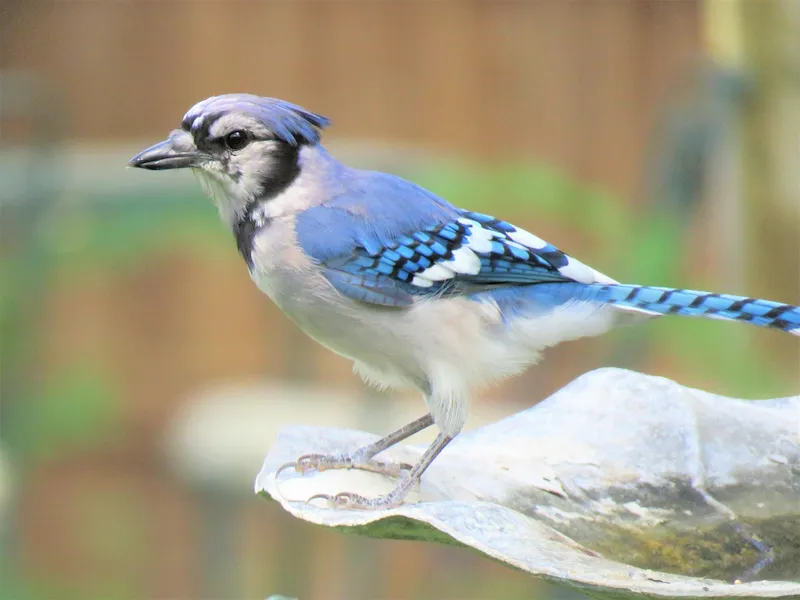
Blue Jays are among the most widespread winter feeder birds in the Northeast: last winter they turned up at 86% of the feeders in Project FeederWatch's Northeast region. They're loud, clever, and sometimes bossy, and they're also one of the most useful birds in the eastern woods. Here's how to bring them in, and how to live with them once they arrive.
By the My Window Birds editors · Published November 23, 2026 · Sources
What Blue Jays eat
In the wild, Audubon's field guide puts plant food at up to 75% of a Blue Jay's diet over the year, and even more in winter: acorns, beechnuts and other nuts, seeds, grain, and berries. The rest is insects and other small animals. At feeders, they come for seeds and suet.
| Food | Why it works | Good to know |
|---|---|---|
| Peanuts in the shell | Their favorite; jays carry them off to hide | Plain only: raw or roasted, never salted or flavored |
| Shelled peanuts | Faster to take; other birds share them | Keep dry and throw out any that look moldy |
| Black-oil sunflower | The everyday seed at most feeders | Platform, hopper, or tube with big perches |
| Suet | Fat for cold days | A cage or tail-prop feeder |
| Cracked corn | Cheap and popular with jays | Small amounts only; it spoils when wet |
FeederWatch notes that larger birds like jays "may grab several peanuts at a time and fly off to hide them for later." Don't take it personally when a jay empties a feeder in ten minutes. It's stocking its pantry. For a seed-by-seed comparison, see our bird food guide.
The right feeder
Blue Jays are big — 9 to 12 inches long, according to Audubon — and they like room to land. A platform (tray) feeder or a large hopper suits them best; small tube feeders with short perches are awkward for them. A platform also lets you put out whole peanuts, which jays love to pick up and carry off.
Platform feeders need extra care: droppings collect on the tray along with the food. Shake out old seed often and clean the feeder about every two weeks.
The acorn planters: why an oak is the best Blue Jay feeder
Blue Jays don't just eat acorns. They plant them.
- They carry several at a time. Mass Audubon explains that a jay can hold up to three acorns in a pouch in its throat, one in its mouth, and one in the tip of its bill: five per trip.
- They store thousands. One jay can cache 3,000 to 5,000 acorns in a single fall, according to Mass Audubon.
- They move whole forests. In a classic study in Blacksburg, Virginia (Darley-Hill and Johnson, 1981), Blue Jays carried off and buried 133,000 pin oak acorns, 54% of the entire crop. They took an average of 2.2 acorns per trip, buried them one at a time under leaves and debris, and carried them an average of 1.1 km (about two-thirds of a mile) from the trees.
Acorns that are never retrieved can sprout, which is why Mass Audubon notes that Blue Jays are often credited with spreading oaks after the last glacial period. Audubon's native-plant advice for jays is simple: plant oaks and beeches. A young oak won't feed jays this year, but it will for decades.
Feed the jays, not the squirrels
Peanuts and corn are as popular with squirrels as with jays, so placement matters more than the feeder you buy.
- Use a pole and a baffle. Audubon's advice: put the pole at least 8 to 10 feet from anything solid (trees, buildings, fences, deck rails), and mount the baffle 4 to 5 feet off the ground. Too low and squirrels jump over it; too high and they climb past it.
- Baffles beat "squirrel-proof" feeders. FeederWatch calls baffles "usually the best way to keep squirrels away from your seed."
- Offer a decoy, if you like. FeederWatch suggests distracting squirrels with peanuts or dried ears of corn set out some distance from your feeders.
For the full set of tricks, see our guide to squirrel-proof feeding.
Blue Jay behavior worth knowing
- The hawk imitations are real. Audubon's field guide describes "a remarkable imitation of the scream of a Red-shouldered Hawk." Audubon magazine and Mass Audubon add Red-tailed Hawk calls too. If a "hawk" screams from your maple and nothing happens, check for a jay.
- They aren't really blue. The Pennsylvania Game Commission explains that the color comes from feather structure, not pigment: tiny air pockets in the feathers reflect the blue part of the light instead of absorbing it.
- They can be bossy. Audubon notes that jays "can be aggressive" and will scare smaller birds off a feeder. A second feeding station a short distance away gives chickadees and titmice a place to eat while the jays take over the first one.
- Families stick together. Young jays stay with their parents for a month or two after leaving the nest, the Game Commission says, still begging for food when they're nearly adult-size.
- They can live a long time. The wild longevity record is 16 years.
Are jays chipping your house paint? FeederWatch has collected reports from the northeastern U.S. and eastern Canada of Blue Jays chipping light-colored house paint. Scientists think the birds are after calcium, since limestone is a common paint ingredient. The fix that worked was eggshells: offer them after sterilizing by boiling, or baking at 250°F for 20 minutes.
Do Blue Jays stay all winter?
Most do. Audubon's field guide says Blue Jays are present year-round in most of their range, though variable numbers move south in fall, sometimes in big daytime flights of thousands. Mass Audubon notes that many migrate only a short distance and plenty stay through the cold months. And the pattern is unpredictable: Audubon magazine notes that some jays "will migrate one year but not the next."
This fall, the Finch Research Network's 2026–27 forecast expects an above-average Blue Jay flight along the north shores of Lakes Ontario and Erie, helped by a good acorn and beechnut crop in the East.
Shelter, nesting, and water
Blue Jays nest in trees, usually 8 to 30 feet up, according to Audubon. A Pennsylvania survey of jay nests found most of them in white pine, hemlock, and white oak, so a yard with a few evergreens and an oak is ideal. Jays drink and bathe like other birds, and in winter open water can draw them in on its own (see how to keep a bird bath from freezing).
The bottom line
To attract Blue Jays, put out plain peanuts on a platform feeder, add black-oil sunflower and suet, and plant an oak if you have room. Use a pole and baffle 8 to 10 feet from anything squirrels can jump from, and add a second feeder so smaller birds get their turn. Then enjoy the show: the hawk impressions, the peanut runs, and a bird that may be planting your neighborhood's next oak.
Get the free guide: Backyard Birds of the Northeast
The Blue Jay is one of 15 birds in our free printable guide. Get a card for each one — how to recognize it and exactly what to feed it.
Download the Free GuideCommon questions
What is the best food to attract Blue Jays?
Peanuts. Audubon calls them the Blue Jay's favorite feeder food. Offer plain, unsalted peanuts in the shell or shelled on a platform feeder. Black-oil sunflower, suet, and small amounts of cracked corn also work.
How do I attract Blue Jays but not squirrels?
Put the feeder on a pole with a baffle 4 to 5 feet off the ground, and keep the pole at least 8 to 10 feet from trees, roofs, fences, and deck rails. Some people also put corn out for squirrels well away from the bird feeders.
Do Blue Jays stay in the Northeast in winter?
Most do. Blue Jays live in most of their range year-round, but some move south in fall, and the same bird may migrate one year and stay the next. Last winter they visited 86% of FeederWatch feeders in the Northeast.
Why do Blue Jays take so many peanuts?
They're caching them. Jays carry several nuts at a time and hide them to eat later, the same way they bury thousands of acorns in fall. Acorns they never come back for can sprout into oak trees.
Why are Blue Jays so aggressive at my feeder?
Jays are big and bold, and Audubon notes they will scare smaller birds off a feeder. It's normal feeder behavior. A second feeding station a short distance away gives chickadees, titmice, and finches a place to eat in peace.
Sources
- National Audubon Society — Guide to North American Birds: Blue Jay
- National Audubon Society — 10 Fun Facts About the Blue Jay
- Mass Audubon — Blue Jays
- Pennsylvania Game Commission — Blue Jays
- Darley-Hill & Johnson (1981), Acorn dispersal by the blue jay, Oecologia
- Project FeederWatch — Feeding Birds
- Project FeederWatch — Blue Jays Eating House Paint
- National Audubon Society — How to Stop Squirrels From Raiding Your Bird Feeders
- National Audubon Society — Grow These Native Plants So Your Backyard Birds Can Feast
- Project FeederWatch — Top 25 Feeder Birds (Northeast region, 2025–26 season)
- Finch Research Network — Winter Finch Forecast 2026–2027
Keep reading: meet the 15 birds of the Northeast, see who else is at the feeder in winter birds of the Northeast, or learn how to attract cardinals, the jay's red neighbor at the feeder.