Seasonal guide · Winter counts
Christmas Bird Count 2026: How to Join From Your Feeder
The short answer: the 2026–27 Christmas Bird Count runs from December 14, 2026 to January 5, 2027. It's free and open to beginners. Find a count circle near you with Audubon's online Circle Finder and get in touch with that circle's leader, called the compiler. If your home is inside a circle, you can even count the birds at your own feeder, as long as you arrange it with the compiler ahead of time.
The Christmas Bird Count began in 1900, and Audubon calls it "the world's longest-running bird count." Last season it set records: 85,222 people took part, including 10,993 who counted from their feeders, and together they tallied 43.8 million birds. Here's how it works, how to sign up, and how to count from the warmth of your kitchen.
By the My Window Birds editors · Published November 23, 2026 · Sources
What the Christmas Bird Count is
The count is really thousands of small local counts. Each one takes place inside a circle 15 miles (24 kilometers) wide. The leader of each circle, the compiler, picks a single day between December 14 and January 5. On that day volunteers count every bird they see or hear inside the circle. The results join a record that goes back to 1900; Audubon counts more than 300 peer-reviewed studies that have used Christmas Bird Count data.
It started as a protest of sorts. Around 1900, hunters had a holiday tradition called the Christmas "Side Hunt": teams competed to shoot the most birds. On Christmas Day 1900, ornithologist Frank M. Chapman proposed counting birds instead. That first year, 27 people held 25 counts, from Toronto to Pacific Grove, California, most of them near the cities of the northeastern United States and Canada. Together they found around 90 species.
This winter's dates at a glance
| Count | 2026–27 dates | Cost |
|---|---|---|
| Christmas Bird Count (127th) | Dec. 14 – Jan. 5; each circle counts on one day | Free |
| Project FeederWatch | Nov. 1 – April 30; you pick your count days | $18 a year in the U.S. |
| Great Backyard Bird Count (30th) | Feb. 12–15, 2027 | Free |
Several Northeast circles have already set their dates. For example, the 127th New Haven count is on Saturday, December 19, and NYC Bird Alliance is already signing up volunteers for New York City's 127th counts. Your own circle's date comes from its compiler.
How to join, step by step
- Find your circle. Open Audubon's Circle Finder and enter your location to find the count circle you're in, or the nearest one.
- Contact the compiler. Sign up through the Circle Finder or write to the compiler directly. Every count is arranged in advance: you can't just count on your own and send in a list. Audubon explains that each count is a real census, and the compiler needs to know who is counting where.
- Choose field or feeder. Field counters join a team that walks or drives an assigned part of the circle. Feeder counters watch from home. Either way, Audubon says, "Beginners are welcome and questions are encouraged."
- Get ready for the day. If you'll be outside, Audubon advises dressing for the weather and bringing water, snacks, binoculars, and a field guide. If you don't have equipment, many counts have some you can borrow.
It costs nothing. Audubon dropped the participation fee in 2012, and the count now runs entirely on donations.
Counting from your feeder
If you'd rather stay warm, a feeder count is the easiest way to take part. All you need is a window, a notebook, and a home inside a count circle. Audubon's feeder-watching guidance asks you to follow a few simple rules:
- Arrange it first. Confirm your location with the compiler or sector leader before count day, so field teams in your area don't count the same birds twice.
- Count on the day only. Record birds only between midnight and 11:59 p.m. on your circle's count day.
- Keep track of your time. Write down how many people watched and for how long, rounded to the nearest quarter hour. Count only the time you actually spent watching.
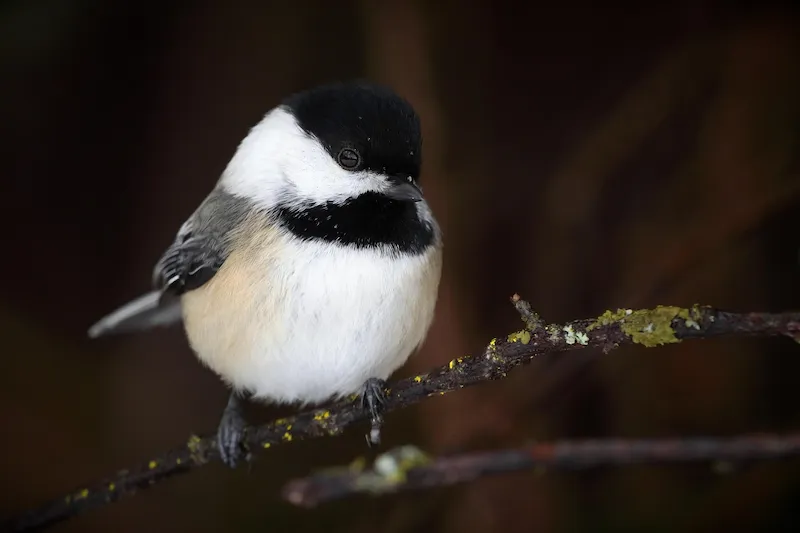
- Never add up visits. For each species, record the largest number you saw at one time. If two chickadees visit in the morning and three in the afternoon, you report three, not five. That keeps the same birds from being counted twice.
- Count what's nearby, not what flies over. A Brown Creeper on a tree next to the feeder counts. A flock of geese passing overhead doesn't.
- Report anything unusual. For a rare bird, ask the compiler for a rare-bird form and return it by January 15. A photo helps.
A few practical tips from us: fill the feeders and clear the snow the afternoon before, so birds have a reason to come at first light. Keep a notebook and binoculars by the window. And keep an ID guide handy for the birds you're less sure of. Our free printable bird guide covers the 15 birds you're most likely to see at a Northeast feeder in winter.
What last year's count found
The 126th count (December 14, 2025 – January 5, 2026) broke records for both counts and people. According to Audubon's summary, volunteers completed 2,701 counts — 2,051 of them in the United States — and counted 43,815,563 birds of 2,435 species. Audubon also notes that the eastern U.S. had cold winter weather and significant winter storms that season.
Here's where the Northeast's best counts were, by number of species:
| State | Top count circle | Species |
|---|---|---|
| New Jersey | Cape May | 152 |
| Massachusetts | Mid-Cape Cod | 138 |
| Rhode Island | Newport County–Westport | 133 |
| New York | Southern Nassau County (Long Island) | 132 |
| Connecticut | New Haven | 124 |
| Pennsylvania | Southern Bucks County | 108 |
| New Hampshire | Coastal New Hampshire | 104 |
| Maine | Greater Portland | 94 |
| Vermont | Burlington and Ferrisburg (tie) | 75 |
Most of the leaders are coastal circles. A backyard feeder count won't produce numbers like these, but it still matters: every chickadee and junco on your list goes into the same long-term record.
Two more winter counts you can do from home
- Project FeederWatch runs from November 1 through April 30. You choose two consecutive days to count, as often as once a week, and report what visits your feeders. The fee is $18 a year for U.S. residents. If you like the Christmas Bird Count, this is a way to keep counting all winter.
- The Great Backyard Bird Count is February 12–15, 2027. It's free, and you can count for as little as 15 minutes from your own backyard.
The bottom line
Mark your calendar for December 14 through January 5. Look up your circle on Audubon's Circle Finder, get in touch with the compiler early, and ask about a feeder count if you'd rather stay warm. Fill the feeders the day before, record the largest number of each species you see at one time, and send in your results. It's free, it's friendly to beginners, and it adds your backyard to a record that goes back to 1900.
Get the free guide: Backyard Birds of the Northeast
Counting from your window? The free printable PDF puts the 15 most common Northeast feeder birds on cards — how to recognize each one at a glance.
Download the Free GuideCommon questions
When is the Christmas Bird Count in 2026?
The 2026–27 count runs from December 14, 2026 to January 5, 2027. Each count circle holds its count on a single day in that window, chosen by the circle's compiler, so check your local circle for its exact date.
Can I do the Christmas Bird Count from home?
Yes, if your home is inside a count circle. Arrange it with the circle's compiler before count day, then count the birds at your feeder during the count day and report how long you watched. Last season 10,993 people took part as feeder counters.
Does it cost anything to join the Christmas Bird Count?
No. The Christmas Bird Count has been free since 2012 and is supported by donations. Project FeederWatch, a separate winter project, charges $18 a year in the U.S.
Do I need to be an expert birder?
No. Audubon welcomes beginners and encourages questions, and your circle leader can help. At a feeder count you simply record the birds you can identify, and ask the compiler about any you're unsure of.
How do I find a Christmas Bird Count near me?
Use Audubon's online Circle Finder at cbc.audubon.org: enter your location to find your count circle, then sign up and get in touch with its compiler. Local Audubon chapters and bird clubs also post their count dates.
Sources
- National Audubon Society — Christmas Bird Count
- National Audubon Society — Christmas Bird Count Circle Finder (2026–27 dates)
- National Audubon Society — Join or Start a Christmas Bird Count
- National Audubon Society — Join the Christmas Bird Count
- National Audubon Society — Answers to Your Top Questions About the Christmas Bird Count
- National Audubon Society — Christmas Bird Count Feeder Watching Guidance (PDF)
- National Audubon Society — The 126th Christmas Bird Count Summary
- National Audubon Society — History of the Christmas Bird Count
- NYC Bird Alliance — Audubon Christmas Bird Count
- Connecticut Ornithological Association — New Haven Christmas Bird Count, December 19, 2026
- Project FeederWatch — How to Participate
- Project FeederWatch — Project Overview
- National Audubon Society — Great Backyard Bird Count
Keep reading: brush up on the 15 birds of the Northeast, see what to feed birds in winter, or find out where robins go in winter — they turn up on plenty of Northeast counts. For the rest of the year, see our month-by-month feeding calendar.