Bird guide · American Goldfinch
How to Attract Goldfinches to Your Yard
Few backyard sights beat a male American Goldfinch in July — a scrap of pure sunshine with a black cap, bouncing through the air with its cheerful "po-ta-to-chip" flight call. People call them wild canaries, and once they find your yard they tend to stay: across the Northeast, goldfinches are year-round residents.
Attracting them comes down to three things — the right seed, kept absolutely fresh, and a few of the right flowers. Here's the whole recipe.
The short answer: fresh nyjer (thistle) in a small-port feeder or a nyjer sock, with sunflower hearts as a backup. Keep the nyjer fresh — goldfinches pass over stale seed — and let coneflowers and other seed heads stand in your garden.
By the My Window Birds editors · Updated October 8, 2026 · Sources
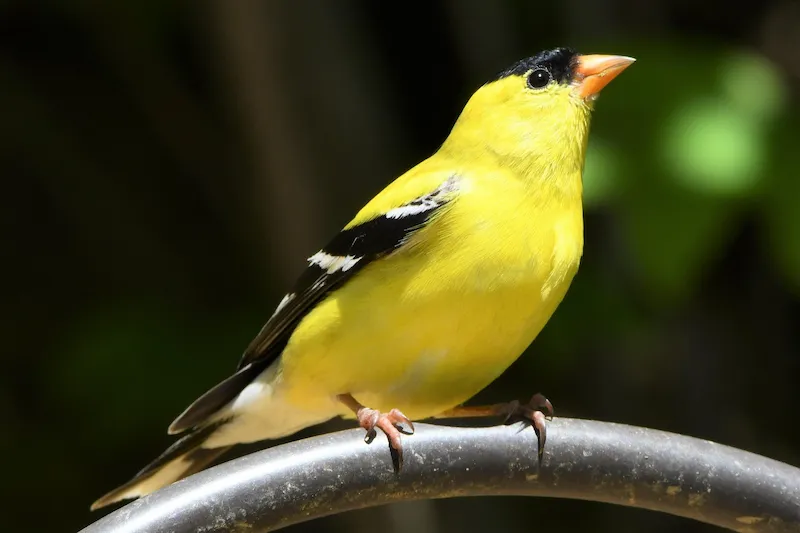
What goldfinches eat
The American Goldfinch (Spinus tristis) is one of the strictest vegetarians in the bird world. While most feeder birds mix in insects, goldfinches eat seeds almost exclusively, all year long — even their nestlings are raised on regurgitated seed.
Two foods matter:
- Nyjer (thistle) seed — the goldfinch magnet. This tiny black seed is high in oil and exactly the size a goldfinch's small bill was made for.
- Sunflower hearts (hulled sunflower) — a strong second choice, and one that plenty of other birds enjoy too.
Everything else in the seed aisle is a distant third. If goldfinches are the goal, nyjer plus sunflower hearts is the whole shopping list. (See the full bird food guide for how the other seeds compare.)
The freshness rule
Here's the single most important thing to know, and the answer to the most common goldfinch mystery: nyjer goes stale surprisingly fast. In heat or damp weather it can dry out or clump within a few weeks — and goldfinches often pass over old seed. A feeder can look perfectly full and be invisible to them.
If goldfinches suddenly stopped visiting a full nyjer feeder, the seed is the suspect, not the birds.
- Buy nyjer in small amounts you'll use within a few weeks.
- Store it sealed, cool, and dry.
- If seed clumps, smells sharp, or has sat untouched for weeks — dump it and refill fresh.
- Give the feeder a proper wash between fills.
The right feeder
Goldfinches are polite, lightweight birds that feed calmly in little flocks — and nyjer needs its own hardware, because the seed is too small for ordinary feeder ports.
- A nyjer/thistle tube with tiny slit-like ports is the standard choice. Multiple perches let a whole flock settle in at once.
- A mesh "sock" feeder is the budget option — goldfinches cling right to the fabric. Replace socks when they get grimy or torn.
- Upside-down feeders (ports below the perches) are a neat trick if house finches crowd the tube: goldfinches happily feed hanging upside down, and most other birds won't bother.
A bonus: squirrels have little interest in nyjer, so this is one feeder you rarely have to defend.
Let flowers do the work
Half of attracting goldfinches happens in the garden bed, not at the feeder. Goldfinches feed heavily on the seed heads of daisy-family flowers — especially natives:
- Purple coneflower (echinacea)
- Black-eyed Susan
- Sunflowers
- Asters
Garden annuals such as zinnias and cosmos (originally from Mexico) work well too.
Plant a patch, then — this is the part tidy gardeners struggle with — leave the seed heads standing when the blooms fade, through fall and winter. A dried coneflower bed is a goldfinch buffet. And skip the herbicide on a weedy corner if you can: goldfinches adore the seeds of plants most lawns are at war with, thistle and dandelion included.
Water helps too
A shallow birdbath — an inch or two of clean water — draws goldfinches reliably, especially in summer. A dripper or any moving water makes it even better.
Goldfinches through the year
Summer. Goldfinches are famously late nesters — they wait until late June, July, even August, when thistledown is available for nest lining and seed is everywhere. While other birds' feeders go quiet in midsummer, keep the nyjer fresh: goldfinch season is just peaking.
Fall. The males' brilliant yellow fades to olive-brown in the fall molt. Goldfinches replace their body feathers twice a year — unusual among our finches — which is why the spring transformation feels so dramatic.
Winter. They don't leave — they just go drab and travel in flocks. Keep the nyjer feeder going and you'll host a dozen quiet olive birds that start turning gold in late winter and are fully golden by mid-spring. They're one of the 15 Northeast feeder birds you can count on in every season.
The bottom line
Fresh nyjer in a small-port feeder, sunflower hearts as a backup, a few coneflowers left standing, and a splash of water. Do that, and the "wild canaries" will find you — and stay all year.
Get the free guide: Backyard Birds of the Northeast
Goldfinches are just the start. The free printable PDF shows the 15 most common feeder birds of the Northeast and what to feed each one.
Download the Free GuideCommon questions
What is the best food to attract goldfinches?
Nyjer (thistle) seed in a special small-port finch feeder, with sunflower hearts as a second choice. Freshness matters more than brand — goldfinches refuse stale nyjer.
Why did goldfinches stop coming to my nyjer feeder?
Almost always because the seed has gone stale or damp. Nyjer can go stale within a few weeks, faster in heat or rain. Empty the feeder, clean it, and refill with fresh seed — the flock usually returns.
When do goldfinches visit feeders?
All year in the Northeast. They're brightest and busiest in summer — they nest as late as July and August — and visit in drab olive plumage through winter.
What flowers attract goldfinches?
Seed-bearing flowers in the daisy family: purple coneflower, black-eyed Susan, sunflowers, and asters, plus garden zinnias and cosmos. Leave the seed heads standing after blooming — that's what the birds come for.
Why aren't my goldfinches yellow?
Only breeding-season males are bright yellow. Females are a softer olive-yellow in summer, and after the fall molt both sexes turn a drab olive-brown for winter.
Sources
- National Audubon Society — Guide to North American Birds: American Goldfinch
- National Audubon Society — 10 Fun Facts About the American Goldfinch
- Project FeederWatch (Cornell Lab) — Feeding Birds
- National Wildlife Federation — Setting a Winter Table for Wildlife
- Mass Audubon — American Goldfinches
- National Audubon Society — How to Make a Birdbath
Keep reading: meet the 15 birds of the Northeast, pick the right seed in our bird food guide, make your yard a cardinal favorite, or try hand-feeding a chickadee.