Bird guide · Black-capped Chickadee
How to Attract Chickadees to Your Feeder
If you're new to feeding birds, there's a good chance a chickadee will be your very first visitor. These tiny, round, black-capped birds are among the boldest and most curious at any feeder — and across most of the Northeast, the Black-capped Chickadee is a year-round resident that stays put right through the coldest winters.
Better still, chickadees are one of the few backyard birds you can actually train to eat from your hand. We'll cover how to attract them first, then how to earn that little moment of trust.
The short answer: put out black-oil sunflower seed and suet in a tube or hopper feeder near trees or shrubs. Chickadees usually find a new feeder within days — and on cold mornings, with patience, some will take seed from your hand.
By the My Window Birds editors · Updated October 8, 2026 · Sources
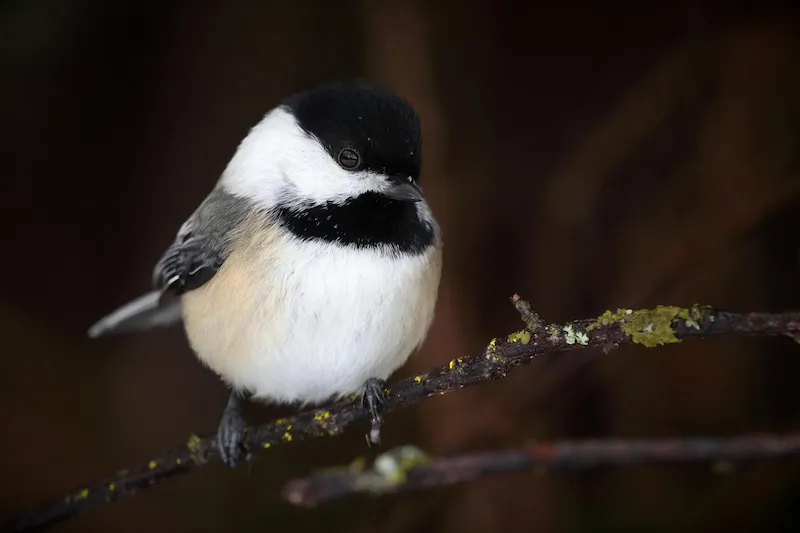
What chickadees eat
Chickadees are easy to please, which is part of their charm. Offer any of these and you'll likely have chickadees within days:
- Black-oil sunflower seed — the top choice. Easy for their small bills to handle, rich in the fat they need in winter. Sunflower hearts (shell-free) work just as well and leave no mess.
- Suet — a chickadee favorite, especially in cold weather, and a great source of energy.
- Peanuts — shelled peanut pieces are a hit.
Avoid cheap seed mixes padded with filler grains like milo, wheat, and oats — chickadees, like most desirable birds, will ignore them. Stick with sunflower as your foundation and you can't go wrong.
A fun thing to watch for: a chickadee will usually grab a single seed, fly off to a nearby branch to crack or hide it, then come right back for another. They're famous for caching food — hiding thousands of seeds around their territory and remembering where they put them.
The right feeder
Chickadees aren't picky about feeder style. They'll happily use tube feeders, hopper feeders, and suet cages, and their natural clinging ability lets them feed from just about anything. If you want to favor chickadees (and other small birds) over larger "bully" birds, a small tube feeder or a weight-sensitive feeder works well — the little chickadees get access while heavier birds are shut out.
Place the feeder within about 10 to 15 feet of a tree or shrub. Chickadees like to approach in stages — landing in cover first, then darting to the feeder for a quick grab — so nearby branches make them feel safe.
Give it time
If you've just put up your first feeder, patience is the main ingredient. It can take a few days to a couple of weeks for chickadees to find and trust a new feeder. Keep it stocked and they'll come. Once a chickadee decides your yard is a reliable source of good food, it becomes a loyal regular — and starts to associate you with the snacks.
That association is the key to the next part.
How to feed a chickadee from your hand
This is the magic trick of backyard birding, and chickadees are the perfect bird for it — naturally tame, curious, and bold. It takes patience, but the payoff is unforgettable: the featherlight grip of tiny feet on your fingers and the soft draft of wings as the bird flits away. Here's how to give yourself the best chance.
- Build trust in your yard first. Before a chickadee will land on your hand, it needs to see your yard as safe and you as harmless. Spend time near the feeder each day so the birds get used to your presence.
- Pick cold weather. The colder it is, the more motivated chickadees are to take an easy meal — hunger overcomes caution. In the Northeast, late fall through winter is prime time. A snowy morning is ideal.
- Make your hand the only easy option. The night before, empty the feeder of all but a few seeds. In the morning, the birds arrive hungry and find the feeder nearly bare — so the seeds in your open hand become the best offer around.
- Stand still and wait. Position yourself right next to the feeder (or a tree the birds use), palm open and flat, filled with shelled sunflower seeds or peanut pieces. Hold your hand out at arm's length. Then stay perfectly still. Avoid staring directly at the birds — it tends to make them nervous. Blink slowly, stay relaxed, and be patient.
- Let it happen on their terms. It may take several sessions across several days. A chickadee will study you, come close, retreat, come closer. Then one will finally commit — a quick flutter, a light landing, a grabbed seed, and away. Only one or two people should try at a time; a crowd makes the birds nervous.
Don't be discouraged if it takes a while, or if one wary bird in the group sounds the alarm and scatters the rest. Keep at it on the cold mornings, and sooner or later a brave little chickadee will trust you.
The bottom line
Attracting chickadees is one of the easiest wins in backyard birding: put out black-oil sunflower seed and suet, place the feeder near cover, and give it a little time. Then, once they're regulars, try the cold-morning hand-feeding trick — because few moments beat a wild chickadee choosing to land on your hand.
Get the free guide: Backyard Birds of the Northeast
Want to know which other birds are visiting your yard and what to feed each one? The free printable PDF has a card for all 15 common feeder birds.
Download the Free GuideCommon questions
What is the best food to attract chickadees?
Black-oil sunflower seed is the top choice, along with sunflower hearts, suet, and shelled peanuts. Avoid cheap filler mixes with milo and wheat.
Can you really feed a chickadee from your hand?
Yes. Chickadees are among the tamest backyard birds and can be trained to take seeds from an open hand, especially on cold winter mornings when food is scarce. It takes patience and stillness.
What kind of feeder do chickadees like?
Chickadees use tube, hopper, and suet feeders readily. A small tube or weight-sensitive feeder can favor them over larger birds.
How long does it take for chickadees to find a feeder?
Usually a few days to a couple of weeks. Once they find a reliable feeder, they become loyal daily visitors.
Do chickadees stay in the Northeast in winter?
Yes. Black-capped Chickadees are year-round residents and don't migrate, toughing out even the coldest Northeast winters — which is why winter is the best time to hand-feed them. In southern New Jersey and southern Pennsylvania, you're more likely to see the near-identical Carolina Chickadee; the same advice works for both.
Sources
- Project FeederWatch (Cornell Lab) — Feeding Birds
- National Audubon Society — Guide to North American Birds: Black-capped Chickadee
- Pennsylvania Game Commission — Chickadees
- Mass Audubon — Black-capped Chickadees
- Smithsonian Magazine — Black-Capped Chickadees Are Masters of Memory, and Scientists Are Finding Out Why
- National Audubon Society — The Audubon Guide to Winter Bird Feeding
Keep reading: meet the 15 birds of the Northeast, pick the right seed in our bird food guide, bring in the other backyard favorite with our cardinal guide, or learn how to keep your feeder clean.