Bird food · Recipes
Homemade Suet for Birds: An Easy No-Melt Recipe
Melt 1 cup of lard with 1 cup of peanut butter, stir in 2 cups of quick oats, 2 cups of cornmeal, and 1 cup of flour, press it into a pan, and chill. That's a classic "no-melt" suet: it holds together far better than plain fat, woodpeckers and chickadees love it, and it takes about 15 minutes to make.
One rule matters more than the recipe: serve homemade suet in cool weather only. Audubon advises against putting homemade suet out when it's warmer than about 50°F, and naturalist Julie Zickefoose, writing for Audubon, sets her limit at 55°F. In the Northeast, that makes it a treat for roughly October through April. Here's the full recipe, how to serve it, and what to leave out.
By the My Window Birds editors · Published October 8, 2026 · Sources
The no-melt suet recipe
Makes: one 8-by-8-inch pan — four squares that fit a standard suet cage.
Ingredients
- 1 cup lard (or rendered beef suet)
- 1 cup peanut butter — plain, crunchy or smooth
- 2 cups quick-cooking oats
- 2 cups yellow cornmeal
- 1 cup white all-purpose flour
- Optional: ½ cup sunflower hearts or chopped unsalted peanuts
Steps
- Mix the dry ingredients — oats, cornmeal, flour, and any add-ins — in a large bowl.
- Melt the lard and peanut butter together over low heat, or in the microwave in 30-second bursts, stirring until smooth. Warm it just enough to melt; it should never smoke.
- Pour the fat over the dry mix and stir until everything is coated and you have a stiff, crumbly dough. Too greasy? Add a little more flour or cornmeal. Too dry to hold together? Add a spoonful more melted lard.
- Press it firmly into a pan lined with parchment paper, about 1½ inches deep. Empty plastic suet trays, square food containers, or even an ice cube tray work too.
- Chill until firm — an hour or two in the freezer — then cut into squares. Wrap the extras and keep them in the freezer, taking out one cake at a time.
Many versions of this recipe, including the well-known one passed around for years, add ⅓ cup of sugar. Birds don't need it, so we leave it out.
Why "no-melt" doesn't mean "summer-proof"
Plain fat turns soft and greasy as soon as the weather warms. The flour, oats, and cornmeal in this recipe give it body, so it crumbles instead of dripping — that's all "no-melt" means. It still softens in warm weather, and fat that sits out in the heat can turn rancid.
So treat homemade suet as a cold-season food:
- Serve it when it's below about 50–55°F. In the Northeast, roughly October through April.
- Take it down if it softens, smells sour, or shows any mold.
- For warm months, buy commercial cakes. Project FeederWatch notes that suet can go rancid in hot weather unless it has been specially processed. Even with store-bought "no-melt" cakes, check them often in summer.
Choosing the ingredients
- Fat. Lard is easy to find and birds take it readily; Zickefoose reports her birds prefer it to vegetable shortening, though shortening works too — Audubon's own recipe uses it. You can also ask a butcher for beef suet, the hard fat around the kidneys, and melt it down yourself.
- Peanut butter. It binds the mix and adds protein. Choose a plain one — no added sweeteners, and unsalted if you can find it. If you have a dog, avoid any peanut butter with xylitol, which is toxic to dogs, since dropped crumbs end up on the ground.
- No peanut butter? Use another nut butter, as Audubon's recipe allows, or replace it with more lard.
- Grains. Oats, cornmeal, and white flour give the cake its shape. Skip whole-wheat flour — Zickefoose found it spoils too quickly.
- A note on calcium. Rich homemade mixes are heavy on fat and light on calcium. Zickefoose added unmedicated chick starter to her well-known "Zick Dough" for exactly that reason — another sign that homemade suet is best as a winter supplement, not the only thing on the menu.
What never to add
- Bacon grease and meat drippings. Some guides say drippings are fine, but bacon fat is usually salty and cured with chemicals birds don't need. Plain lard or beef suet is the safer choice.
- Salt in any form — salted nuts, salted butter, seasoned fats.
- Bread, crackers, or baked goods. They add bulk without the nutrition birds need.
- Anything moldy, stale, or rancid. If it smells off, throw it out.
How to serve homemade suet
- Use a suet cage. This recipe is firm enough for a standard wire cage. Cages that open only at the bottom help keep starlings off, according to Project FeederWatch — woodpeckers don't mind feeding upside down.
- Hang it near a tree trunk. Woodpeckers and nuthatches like to approach the way they would on bark.
- Put out one cake at a time. Fresh beats a week-old stockpile.
- Keep it clean. FeederWatch recommends cleaning suet feeders every week or two; see how to clean a bird feeder.
- Watch for squirrels. If they discover it, a baffle is the real fix — see squirrel-proof feeding.
Who will come to it
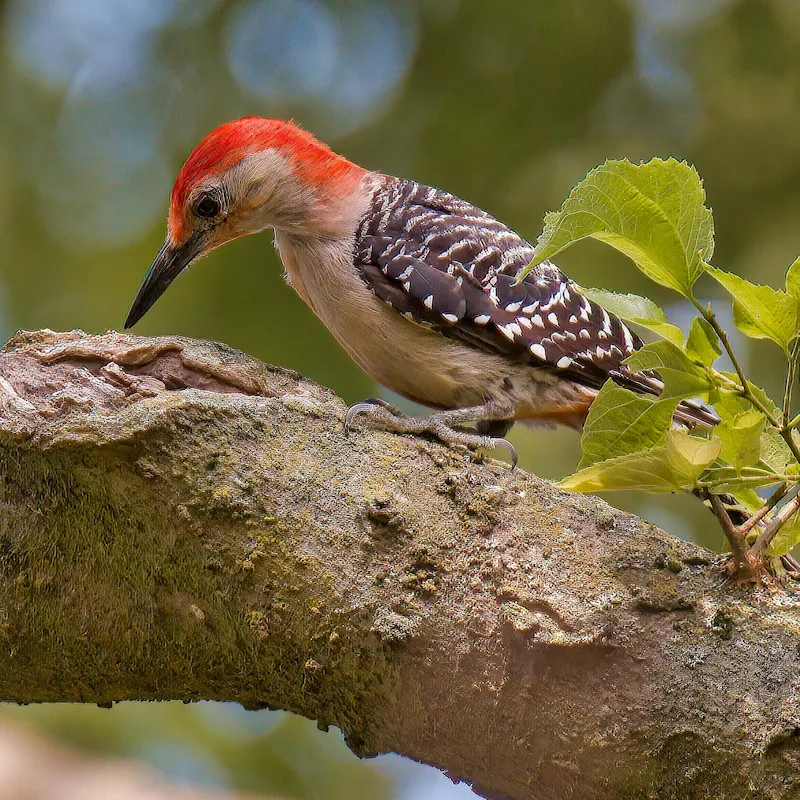
Expect the insect eaters first: Downy, Hairy, and Red-bellied Woodpeckers, White-breasted Nuthatches, Black-capped Chickadees, Tufted Titmice, and Carolina Wrens. Blue Jays will help themselves too, and in wooded yards you may even tempt a Pileated Woodpecker. For tips on bringing in the woodpeckers, see how to attract woodpeckers.
The bottom line
Homemade suet is cheap, quick, and a real treat for winter birds. Mix 1 cup lard and 1 cup peanut butter with 2 cups oats, 2 cups cornmeal, and 1 cup flour; press, chill, and serve it in a suet cage — but only in cool weather, below about 50–55°F. Skip the bacon grease, salt, and bread, and take it down the moment it softens or smells off. For the rest of the cold-season menu, see what to feed birds in winter.
Get the free guide: Backyard Birds of the Northeast
Who's eating your suet? The free printable PDF covers the 15 most common Northeast feeder birds — how to recognize each one and what it likes to eat.
Download the Free GuideCommon questions
What is the best homemade suet recipe for birds?
A simple no-melt mix: melt 1 cup lard with 1 cup peanut butter, stir in 2 cups quick oats, 2 cups cornmeal, and 1 cup flour, press into a pan, and chill until firm. It holds together in a suet cage and draws woodpeckers, nuthatches, chickadees, and titmice.
Is homemade suet safe in summer?
No — serve it in cool weather only. Audubon advises against homemade suet when it's warmer than about 50°F, and some experts use 55°F as the limit. In warm weather it softens and can turn rancid. In summer, use commercial cakes and check them often.
Can I use bacon grease to make suet?
It's best not to. Bacon grease is usually salty and contains curing chemicals. Use plain lard or rendered beef suet instead.
Can I make suet without peanut butter?
Yes. Use another nut butter, or replace the peanut butter with more lard. The oats, cornmeal, and flour are what hold the cake together.
Which birds eat homemade suet?
Mostly insect-eating birds: Downy, Hairy, and Red-bellied Woodpeckers, nuthatches, chickadees, titmice, and Carolina Wrens. Blue Jays and starlings will eat it too.
Sources
- Project FeederWatch (Cornell Lab) — Feeding Birds: suet and suet feeders
- Audubon Magazine — Make Your Own Suet
- Audubon Magazine — Julie Zickefoose, This Addictive Homemade Suet Will Keep Your Birds Returning for More
Keep reading: see what to feed birds in winter, learn how to attract woodpeckers, match every seed to its birds in our bird food guide, or meet the 15 birds of the Northeast.